
Resolve the past without reliving it
Gentle and rapid trauma processing for those whose past still lives in the present – and for the therapists who help them.

When your past still lives in your present
Whether you are seeking help for the first time or have been in therapy – or been a therapist – for years, the problem is the same: A memory from your past is stuck in your present, affecting your relationships, career, and peace of mind.
You may have tried various approaches:
Cognitive
You understand why you feel this way, but the insight hasn't changed how you feel.
Affective
You've tried to “feel your feelings” and "cry it out", but afterwards the pain is still there.

Somatic
You can breathe and ground yourself in the moment, but the memory keeps coming back.
If you’ve been unable to think, feel, or breathe your way out of trauma, it’s because the memory is stored in a part of your brain that most therapy can’t reach.
The Mechanics of Trauma Resolution: A Brain-Based Approach
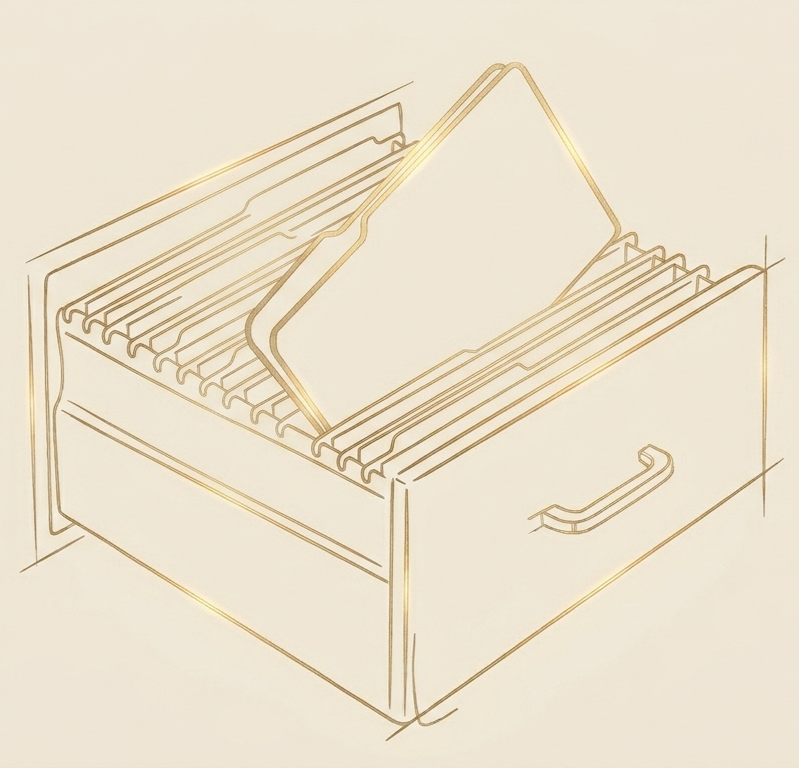
Think of your brain as a sophisticated filing system. Most memories sit neatly in the drawers, remaining in the past until you choose to recall them.
An unresolved trauma is like a file that was shoved in during a crisis, sticking out at an angle. When you try to close the drawer, you hit the file and experience a sense of anger, anxiety or fear.
Brain-based techniques like MEMI and Brain-Switch 2.0 don't change the contents of the file or erase the memory. Instead, they use neuroscience-based techniques to straighten the file so it can finally slide into its proper place.
How the Memory Gets Updated
1. Activate the Memory
We start by gently activating the memory. Instead of reliving it, we move it “outside” you by projecting or moving the images, sounds and sensations. This process of externalisation creates distance and perspective without the overwhelm.
2. Introduce New Input
While the memory is active, we introduce novel sensory inputs, like eye movements or creative visualisations. This creates what neuroscientists call a "prediction error." Your brain expects the old distress, but instead encounters a safe, neutral distraction.
3. Update the Memory
Your brain realizes that the old model is no longer accurate today. It permanently updates the memory as a neutral piece of your past. The file is straightened, the drawer is closed, and your mental energy is finally freed up for the present.
This process typically takes one to three sessions for most of my clients.
For those who are interested, I also teach them a simplified version of MEMI and/or Brain-Switch 2.0 that they can use on their own as a form of self-care. This is especially useful for therapists working with high-volume, high-risk clients.
If other therapy approaches haven’t worked for you, why not try a different approach?
A Different Kind of Therapist

My clients tell me I’m not your usual therapist.
My approach to healing is shaped by a law degree from Oxford, over a decade in the UK, a career in Singapore’s public sector, and my own experiences with therapy.
These experiences instilled in me a commitment to finding what really works: science, structure and results.
I don’t believe therapy has to be heavy, tearful or endless to be effective. Instead of traditional talk therapy, I use brain-based techniques that are rapid, targeted and gentle.
My sessions are practical, direct, and often involve a shared laugh. I’m not a blank canvas. I bring “me” into the room so that you can bring “you”.

Master of Counselling
Certified Multichannel Eye Movement Integration (MEMI) Practitioner
Certified Brain-Switch 2.0 Practitioner
Integrative Attachment Therapist
Certified Hypnotist
Licensed Practitioner of NLP
MBTI Certified Practitioner
Co-Vice President, Brain-Switch 2.0 International
Founding Member, MEMI International Asia
What Clients Say
-
![]()
"Eunice taught me a method to help me cope with my recurring and intrusive thoughts that stemmed from my past trauma and anxiety. She provides a solution that is quick and effective to address the current problem, that gives an alternative to long-term therapy."
- ”Li Jing”, 26
-
![]()
"MEMI is a great way and contribution to the community as it is gentle to support our journeys that sometimes is not easy. For myself, I never expect the gentleness of the process this way."
- “Julia”, 29
-
![]()
If you were to recommend Eunice to a friend, what would you tell them?
"I would tell them that their life will experience an immense healing that will transform into a person they are meant to be."
- “Faizal”, 38
-
![]()
"Eunice made me feel optimistic about life, and that there are better things coming my way. If you are looking for a cheer leader, a motivator, and someone who is trained to work through your old issues or burdens, she's the one for you. I really liked that she doesn’t believe in consistently seeing her, and believes in the 1 to 3 sessions approach. Very rare!"
- “Debbie”, 33
-
![]()
"My life nowadays is a rebirth after my sessions with Eunice! My perspectives in life has changed to being positive & progressive. I am able to see all the green & red flags in other people - which I couldn't do it last time."
- “Janice”, 47
-
![]()
"Eunice is kind and encouraging, and great at what she does. The sessions empowered me to improve myself and become the person I want to be. I was able to better deal with the OCD anxiety and be more rational when dealing with it."
- “Timothy”, 25
-
![]()
"In medical appointments, I had extreme anxiety, occasional panic attacks or emotional breakdowns, and a lot of fear. My session with Eunice helped me to understand my traumatic experience in new ways, leading to forgiveness and empathy for my past self. I felt more in control during my last medical appointment."
- “Jennifer”, 32
-
![]()
I felt stuck on the issues I was trying to address, I had tried a number of other modalities and couldn't find a process that would meaningfully help or create a difference. After MEMI and Brain-Switch 2.0, I now feel physically, mentally and emotionally lighter and am able to move forward with a sense of freedom, clarity and purpose. If you are dealing with issues where you have tried everything and it hasn't worked, please see Eunice.
- “Priya”, 37
-
![]()
“I've been sleeping better and haven't had any dreams or recollection about the traumatic period in my life. Eunice is a good listener and is very gentle and patient in her approach. Feels very reassuring and there’s no pressure.”
“Boon Heng”, 26
-
![]()
"Eunice was very kind, comforting and supportive throughout the entire period, which really helped in providing us with a very safe space to process our negative traumatic memories and take on much better ones. We both left the session feeling very calm, and much stronger and confident in our abilities to handle the challenges ahead."
- “Sarah”, 25
-
![]()
“I felt so much lighter, I loved her voice, I felt safe and supporterd and loved the whole experience and decided I want to see her again for sure!
Thank you Eunice for this experience and for what you do to help make this world a better place by supporting your clients through their healing journey.”- “Layla”, 50

Blog Posts



Exposure therapy isn't the only option for treating a phobia. Here's a gentler, three-step approach that works with the memories driving your fear, without repeated exposure to the trigger, often in just one to three sessions.