
A Therapist’s Guide to Setting Up a Private Practice in Singapore (2026): The Nuts and Bolts


When organising my Therapists Talk discussions for private practitioners, I realised there was a lot of interest in the topic of starting out in private practice.
I’ve therefore put together the first part of a guide on setting up a private practice as a therapist in Singapore, starting with the administrative aspects. The next part will cover marketing.
Topics covered in this guide:
Business Structure
Bank Account
Practice Name
Website
Google Business Profile
Email Account
Mobile Number
Business Cards
Therapy Room
Options: Minimalist, Streamlined and Optimised

As we’re all on different parts of our journey and have different needs, values and preferences, I’ve tried where possible to give three options for each piece of admin:
MINIMALIST: For therapists who are just starting out or prefer a fuss-free approach so they can focus on their clients.
STREAMLINED: For therapists who are willing to spend a bit more time on admin to create a smoother workflow and client experience.
OPTIMISED: For therapists who prefer a more comprehensive and professional approach to running their practice.
Points to Note
The information in this guide is for educational and informational purposes only. It’s based on my personal experience and research, which may not be accurate or appropriate for you. Please do your own research and seek professional, legal and financial advice as needed to figure out what works best for you.
Unless stated, I don’t receive commissions or referral fees from the companies mentioned in this guide.
This guide will be a work in progress, so I’d love to hear from you if you spot any errors or have any tips to share.
Business Structure
Source: Bizfile
Which business structure should you choose for your therapy practice?
MINIMALIST: No business entity.
If you’re just starting out and testing the waters, you can practise as a therapist without registering a business with ACRA if you conduct business using your full name as reflected in your NRIC. If you add any descriptive words before or after your name (e.g. “Nancy Tay Jia Hui Therapy”), you must register the business (see Who Must Register with ACRA?).
If you’re happy to use your full NRIC name and don’t want the hassle and cost of registering and maintaining a business, then you can go with this option.
Do note that your practice income will be taxable as personal income even if you don’t set up a business entity. So please track your practice income and expenses accordingly.
STREAMLINED: Register a sole proprietorship.
Registering a sole proprietorship with ACRA is pretty straightforward and inexpensive.
Advantages of having some kind of business entity:
You can choose a nice name for your practice
You’ll be able to open a business bank account and accept PayNow via UEN rather than mobile number
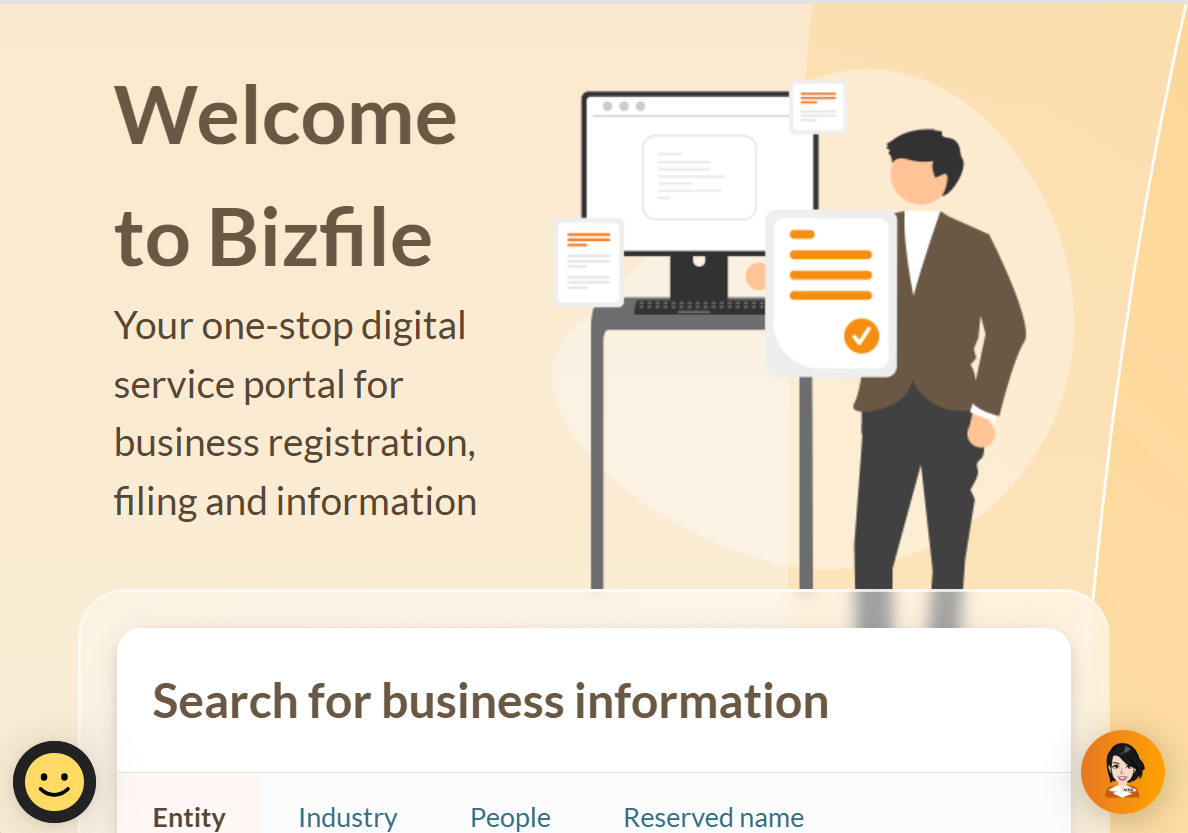
You’ll come across as more credible and professional. Clients can verify your business on BizFile.
But a sole proprietorship is not a separate legal entity from you, so make sure your practice is covered by professional indemnity insurance.
OPTIMISED: Register a separate legal entity.
If you want to limit your legal liability, you can register a separate legal entity, i.e. a limited liability partnership or a company.
With a company, you’ll pay corporate tax rates on your earnings from your practice, which is lower than personal tax rates.
But note that the compliance costs of these structures can be high, especially for a company structure, e.g. appointing a corporate secretary, filing annual financial statements.
For more information, see ACRA’s guide to Choosing a Business Structure. They even have an e-Adviser for Business Structure that can recommend a business structure for you.
Bank Account

Do you need to have a separate bank account for your therapy practice?
MINIMALIST: Use your personal bank account.
If you haven’t set up a business entity or are using a sole proprietorship, you have the option of using your existing personal bank account for client fees and business expenses. This saves costs and is convenient.
However, if your practice name is different from your personal name, clients will see your personal name if they pay you via PayNow or bank transfer, which looks less professional.
STREAMLINED: Set up a digital bank account.
If you’ve set up a business entity, you can set up a low- or no-cost digital bank account linked to your UEN, using a provider like Aspire, Wise Business or YouBiz.
Advantages:
You can set up a PayNow QR code with your business name
These providers often have integrated accounting software
They often provide low-cost ways of receiving overseas payments through multi-currency accounts.
OPTIMISED: Get a business bank account.
You can also set up a business bank account with traditional banks in Singapore like DBS, OCBC and UOB. It can be reassuring to have a branch to visit and real humans to talk to if you need banking support.
Note that there may be monthly fees and penalty fees if your balance drops below a certain amount. Fees may also be higher for receiving overseas payments.
Practice Name

What name should you choose for your therapy practice?
Assuming you register some kind of business entity with ACRA (see “Business Structure” above), you get to decide what name to use for your practice.
Here are some approaches to consider.
1. PERSONAL: Include your personal name in your practice name, e.g. “Nancy Tay Counselling”.
This can create trust and is good for personal branding, especially when you become better known.
But when you’re just starting out, a practice name that is based on your own name will not do well in SEO terms (e.g. Google searches).
It may be harder to scale if you ever want to employ or partner with other therapists.
2. METAPHORICAL: Use metaphorical or evocative words in your practice name, e.g. “Green Space Therapy”.
This can create a distinct brand identity.
But again, this kind of name may not do well in terms of SEO in the early days, unless you add some descriptive terms.
3. DESCRIPTIVE: Include your niche or service in your name, e.g. “Harbour Relationship Counselling” or “Nancy Tay Trauma Therapy”.
The name may be a little less elegant, but it will help potential clients to find you more easily when searching online.
The most important thing is to choose a name that resonates with you and feels authentic to who you are. You can always change it later, if you’re OK with some administrative hassle. Of course it’s ideal if you choose one name and stick with it.
Website

Do you need a website for your therapy practice?
MINIMALIST: No website.
Save costs and hassle by using social media (Instagram, Facebook, LinkedIn) or a directory.
But note that your SEO may be affected if you don’t have your own website.
Most clients do expect some kind of website where they can look up your services, prices, information about you, etc. It makes you come across as more “legit” and professional.
STREAMLINED: Create a simple website.
You can set up a simple website for low or no cost using providers like Wix or WordPress. You might still have to pay for web hosting.
The downside is that you may not get your domain name of choice and the provider’s branding may appear on your website. This may not look very professional.
OPTIMISED: Have a paid website.
A paid website will cost you a few hundred dollars a year for the domain name and web hosting. But having a clean, professional-looking website makes you look more credible.
I use Squarespace, which I find quite manageable.
Google Business Profile
Source: Google Business Profile
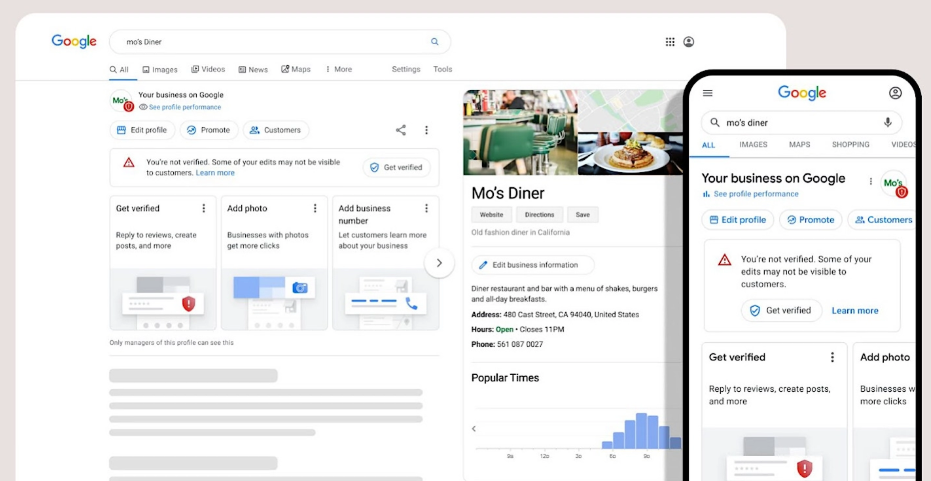
Setting up a Google Business Profile is one of the most effective (and free!) ways to boost your credibility and visibility, and to help clients find you.
When someone searches in Google for your practice name (or something similar), your profile will pop up. Since Google verifies business profiles, potential clients will have more confidence in you.
You can add photos, contact details, social media links, business hours, services and fees, and Q&As to your Google Business Profile. You can even add updates, events and posts. It’s on my to-do list to make better use of my profile.
Clients can leave Google reviews, which will be helpful if they’re favourable.
Email Account

Do you need a separate email account for your therapy practice?
MINIMALIST: Use your existing email account or set up a free one.
You can use your existing email account if the address is fairly sensible, e.g. nancytay@gmail.com (as opposed to ilovesatay@gmail.com).
You can also set up a free email account using a provider like Gmail or Outlook. The downside is that your email address will still be something like “nancytaytherapy@gmail.com”, which may not look very professional.
STREAMLINED: Set up a paid email account.
If you’re setting up a website and bought a domain name, you can use a provider like Zoho Workplace, Google Workspace or Microsoft 365 to set up an email address with your own domain name, e.g. nancytay@greenspacetherapy.com.
This looks more professional and will help you to manage practice-related emails more easily.
OPTIMISED: Set up an email account with end-to-end encryption
Providers such as Hushmail, Proton Mail or Tuta offer end-to-end encryption such that even they cannot access your emails. This provides a high degree of security for your clients.
Mobile Number

Do you need a separate mobile number for your therapy practice?
MINIMALIST: Use your personal mobile number.
You can use your personal mobile number for your practice to save costs and have just one number to manage. Just make sure your WhatsApp name, status and profile photo are appropriate for clients.
But client messages and referrals can get buried in a mountain of personal messages. Your work and personal life may also start to blur into one.
STREAMLINED: Get a separate mobile phone line.
Get a SIM-only plan from one of the major telcos like SingTel or Starhub, or from providers like Giga or Simba. There are lots of providers out there.
If you have a dedicated phone line for your practice, you can set up a WhatsApp Business account. Filling in the business profile section will make it easier for clients and professional contacts to see your other contact details, social media links, website, hours and services.
OPTIMISED: Get a separate phone.
If you prefer to have clear boundaries between your work and personal life, you can even get a second phone that you can put away outside of working hours.
Make sure your clients are aware of your working hours and give them alternative resources in case of emergencies.
Business Cards

Do you need a business card for your therapy practice?
MINIMALIST: No business cards.
Save money and trees! Just share your WhatsApp number, social media profile(s) or website with people you meet.
STREAMLINED: Use a digital business card.
Use a free app like Blinq or HiHello to create a digital business card that you can share with people you meet using a QR code.
OPTIMISED: Print business cards.
Use a printing company like Gogoprint, Fast Print or PrintCity to print business cards.
I designed my business card using Canva, uploaded it to a printing company’s website, and had the cards delivered to me. You can maximise the “real estate” on your business card by adding your services or other information on the back.
You can also hire someone to design your business card.
Advantages:
A physical business card is harder to forget. When the person gets home, they have to touch it again, even if it’s to put it in the recycling bin!
You can ask various places whether you can leave a box of business cards with them. Some might be kind enough to place your cards on their front counter, others might give your card to their clients. You could ask your GP, dentist, physiotherapist, vet, gym, hairdresser, or your favourite coffee shop - wherever your potential clients might hang out. You can also tap on your friends who run their own businesses. More on this in the next part of my guide!
And maybe I’m just old-fashioned, but a real business card just feels more professional. The colour, shape and texture of the card can help to convey your personality and brand. I always carry a few business cards with me as you never know who might need one.
Therapy Room

What are your options for therapy rooms?
MINIMALIST: Only offer online sessions.
Offering only online sessions saves room hire and transport costs, as well as travel time. With the client’s permission, you can also use note-taking software, which will save you time.
However, depending on the modality you use, your personal preference and that of your clients, you may find it limiting to only offer online sessions.
STREAMLINED: Hire rooms ad hoc.
If you’re just starting out, you can hire rooms on an ad hoc basis from providers like The Upper Room, Apex Space, Minmed or A Space Between.
You’ll need to consider factors like price, location, soundproofing, amenities, opening hours, and service. A crucial factor is whether you feel comfortable in the space and whether your clients are likely to as well.
I’m currently using The Upper Room at The Adelphi as it has covered access to City Hall MRT, nicely furnished rooms, and helpful staff. My clients and I feel very comfortable there. With their Premium package (a very reasonable $250 with 6 months’ validity), I pay less than $27 an hour for a spacious and cosy room. (Note: If you get a package with The Upper Room and tell them I referred you, I’ll get 60 credits added to my package!)
OPTIMISED: Share or rent your own space.
If you prefer greater flexibility and have a steady stream of clients, you can partner together with other therapists to rent a space, or you can rent your own space.
If you rent a space with other therapists, you may be able to get a bigger space where you can also hold group sessions, talks or workshops. It’s also nice to have a sense of community. Just make sure that all of you are aligned and seek proper advice before you sign on the dotted line.
Renting a space on your own gives you the greatest flexibility but also financial commitment. Don’t forget you’ll have to furnish and maintain the space on top of paying rent. But you’ll get to decorate it and use it how you want. To recoup costs, you can also hire out the space to other therapists when you’re not using it.
More support
I hope you found this first part of my guide helpful. Part 2 will focus on marketing, something that most therapists struggle with.
If you’d like to connect with other therapists in private practice, you can sign up for Therapists Talk, a series of free, online discussions that I host every 3 weeks.
As I’ve received requests for 1-to-1 support, I also offer collaborative Therapist’s Roadmap sessions for therapists who want a sounding board to work through the challenges of private practice. The first session (online) will be free as most therapists just want to get a sense of direction and action points they can implement right away.
Get in touch
I’d love to connect with you on LinkedIn or Instagram, and feel free to get in touch.
Eunice Tan
Trauma & Attachment Psychotherapist, Free From Trauma
I help people heal from painful memories.


We don’t hold on to painful memories because we’re weak. We hold on because our nervous system is trying to protect us. Here’s why they stay—and how healing begins.